Ezra 2:68-3:13 | Trey VanCamp | April 19, 2026
OVERVIEW
Jesus-First Isn’t Just Heartwarming, It’s a Heart Warning
Buildings can amplify a vision or amputate it.
That’s not a metaphor. It’s church history. Plenty of congregations have built something beautiful and lost something essential in the process. Which is why, before a single wall goes up, we need to be clear about what we’re actually building and why. The first priority we’re anchoring ourselves to is this: Jesus-First. Not growth first. Not progress first. Jesus first.
The book of Ezra shows us what that looks like in practice, and it’s more counterintuitive than you’d expect.
Build the Altar Before the Foundation
When Israel returned from exile and began rebuilding the temple, they did something that didn’t make obvious sense. They built the altar before they laid the foundation.
Under Solomon, when the first temple was built, the foundation came first. That’s the logical order. But Solomon built during peacetime. The returning exiles were surrounded by hostile neighbors, living in a city with no walls, vulnerable on every side.
And so instead of starting with what they could control, they started with what only God could do. They built the altar first, the place of sacrifice and surrender, before they had anything else to show for their work.
Hebrews 13 tells us we have an altar too: the cross where Christ was sacrificed. The altar was never meant to be the place where we earn God’s favor. It’s the place where we return to the love that’s already ours because of Jesus. He laid down his life at the altar first. We lay ours down in response.
If you’re in a season of fear, the instinct is to hunker down, protect what you have, and wait until conditions feel safer. The people of Ezra say something different: it’s not time to store up. It’s time to lay it down.
Presence Over Progress
Here’s where it gets even more counterintuitive. Right in the middle of rebuilding, with enemies nearby and the temple still unfinished, the Israelites stopped to celebrate the Festival of Shelters, a week-long observance where they lived in tents to remember God’s provision during the wilderness years.
They could have skipped it. The wall wasn’t built. The temple wasn’t done. There were a hundred reasons to defer the celebration and just keep working. That’s what fear would have told them to do.
But fear does something predictable: it makes you focus on progress over presence. It tells you to chase tangible results to quiet the anxiety. It whispers that you can worship later, once things are more stable, once the foundation is poured, once the numbers look better.
Faith says something else entirely. Faith says wait on him.
On paper, celebrating a week-long festival in the middle of a construction project looks like a waste of time. In practice, it’s an act of worship that declares: his presence matters more than our progress.
That’s why Jesus-First is our first priority. A building can quietly shift your center of gravity if you let it. You stop asking “Is Jesus being glorified?” and start asking “Is attendance growing?” Those questions aren’t always in conflict, but they’re not the same question.
Fear produces two ugly versions of the church. One becomes a consumer church, doing whatever it takes to draw people in, chasing attendance numbers because the decline data is frightening. The other becomes a crusader church, exploiting outrage and controversy for attention, becoming pundits instead of pastors. Both are driven by fear. Neither is Jesus-First.
Dazzled and Disappointed
When the foundation of the new temple was finally laid, the crowd’s reaction was split. Younger people shouted for joy. Older people who remembered Solomon’s temple wept. The foundation looked small compared to the glory they remembered.
Zechariah had a word for them: don’t despise the day of small beginnings.
Every new work requires a new wineskin. God isn’t confined to how he moved before. If we keep chasing what worked in the last season, we start trusting strategies more than the Spirit.
Until the new creation, we will always be simultaneously dazzled and disappointed. The kingdom is genuinely here, and it’s genuinely not yet fully here. Both are true at once.
The answer to that tension isn’t a better building plan. It’s the same answer it’s always been: presence over progress, faith over fear, the Kingdom over our own empire.
Jesus first. Everything else follows.
Group Guide
Looking for community? Join a Together Group!
Begin with Communion.
As your group gathers together, begin by sharing communion as a meal. Feel free to use the following template as a way to structure and guide this time:
- Pass out the elements. Make sure everyone has a cup of juice and bread. Consider just having one piece of bread that everyone can take a small piece from. If you don’t have bread and juice, that’s okay. Just make sure everyone has something to eat.
- Read 1 Corinthians 11:23-26. Once everyone has the elements, have someone read this passage out loud.
- Pray over the bread and juice. After the reading, have the Leader or Host bless the food and pray over your time together.
- Share a meal. Share the rest of the meal like you normally would beginning with the communion elements. Use these questions to connect with each other during your meal:
a. What was the best part of your week so far? Worst part?
b. What has God been teaching you lately?
c. What’s been hard or heavy? What’s been joyful?
Teaching
In Ezra 3, the people of God gather to rebuild the Temple. Despite their fears, they prioritize God’s presence and are able to finish the altar to consecrate themselves back to God. But some are disappointed. Rather than looking ahead to what God might do, they looked back to compare their current situation with their preferred past. As we continue to build our future, we want to prioritize Jesus and His presence, even when facing fear or disappointment. Being “Jesus-First” means we give, pray, serve, and worship for God’s presence alone, not our progress.
- What stood out to you from Sunday’s teaching?
- Read Ezra 3:7-13 together. What stands out from this story?
- In this chapter, the people of God prioritized completing the temple to house God’s presence, even in the midst of their fear. What’s one area in your life you might be giving into fear rather than trusting in God’s presence?
- In verse 12, some were disappointed with the finished temple because they were comparing it to the past. Where are you tempted to compare what God is doing now to the past, and how might that keep you from seeing what He’s doing today?
- In what ways are you tempted to choose progress over presence, either in your personal life, discipleship, career, or somewhere else?
Community
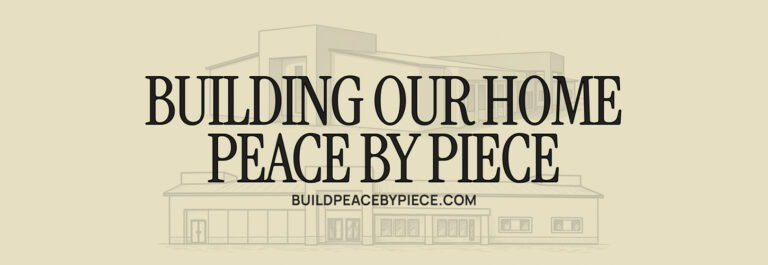
As a church, we’re in a moment similar to what we see in Ezra 3. As we continue our building initiative and walk through our 5 Priorities, we want to create space to ask what kind of church we’re becoming right now. Use these questions to discuss what it would look like for us, as a community, to be a Jesus-first church now and when we get our building.
- What would it look like for us to continue being a “Jesus-first” church now, not just when everything is built?
- In Ezra, the people of God built the temple despite their potential fears. What fears might hold you back from taking any next steps God might lead you to during this initiative?
- What would it look like for both you and our church to choose presence over progress in this season?
- What tensions do you personally feel about this season in our church (excitement, fear, hesitation, comparison, etc.)?
- What are some things you’re tempted to put first in your life before Jesus? How might that affect your community?
Practice
Continue engaging with our church-wide Scripture reading plan this week. If you miss a day, haven’t started yet, or can only read a few days, that’s okay! Jump in where you can as you practice putting Jesus first in your daily life.
As you read, reflect on what you may be tempted to put before Jesus. Pay attention to anything the Holy Spirit highlights, whether it’s a shift in your priorities, a step of obedience, or something to lay down.
Pray
As you end your time together, spend the last few minutes praying over and encouraging each other.
Close your time with this benediction:
Holy Spirit, give us strength to follow you this week. Meet us in miraculous moments, and give us endurance for the marathon. Amen.