Ezra 4-6; 7:10 | Trey VanCamp | April 26, 2026
OVERVIEW
The Storm Isn’t Passing. So Keep On Practicing.
The ancient Greeks had a god named Pan — half man, half goat, creature of the wilderness. He didn’t attack with armies. He appeared suddenly, without warning, to travelers alone in the desert or shepherds alone in the field. And when he appeared, the response was immediate and overwhelming: a rush of fear, a surge of chaos, a desperate urge to run.
The Greeks named that feeling after him. Panikos. Panic.
We don’t believe in Pan anymore. But who among us hasn’t felt exactly that?
We live in what might fairly be called the age of panic. Sudden fear. Constant chaos. Loss of clarity. The overwhelming urge to flee. We’ve gotten so used to it that we don’t even name it anymore. We just call it Tuesday.
There isn’t a Pan. But there is an enemy. And Scripture is clear that he doesn’t operate randomly. He operates strategically, especially when you start building something that matters.
The Pattern of Opposition
In Ezra 4, just as the returned exiles begin rebuilding the temple in Jerusalem, opposition arrives. And it doesn’t come as an army. It comes as neighbors offering to help.
The leaders discern the offer and decline. And immediately, those same neighbors reveal their true intentions, doing everything they can to stop the work. They discourage the builders. They spread fear. They bribe officials. They twist words and assign motives that were never there.
It’s worth naming what this is: psychological warfare. Propaganda and persecution, not swords and spears.
There’s a principle buried in this moment that applies well beyond ancient Jerusalem. Niceness doesn’t always equal righteous. Evil is usually polite. Deception is believable. The enemy’s first move is rarely a frontal assault. It’s a subtle offer, a friendly suggestion, a reasonable-sounding compromise.
Do the people of God see through it and push forward? Eventually. But first, they stop. For sixteen years.
Letting Off the Gas
Panic convinced them that if they just eased up, the storm would pass. Building the foundation had made people angry. Following God’s direction had made life harder, not easier. So the logic went: at least we have the foundation. At least we’re back in Jerusalem. For now, I’ll just focus on my own house, my own peace.
Sixteen years. Settled. Stalled.
God raises up Haggai and Zechariah to wake them up. And what’s striking about their message is what it isn’t. God doesn’t primarily tell them to work harder. He strengthens them by reminding them who is with them: “Be strong… for I am with you. Do not fear.”
Here’s what needs to be said plainly: your storm won’t pass if you let off the gas. But your story might.
There’s a man in Genesis 11 named Terah, the father of Abraham. The text suggests Terah was originally called to go to Canaan, the promised land. But along the way, he stopped in a place called Haran, named after his son who had died. And he never left. He let the pain of his past define his future.
Abraham went on to become the father of a nation. Terah died in Haran.
Don’t die in Haran. Don’t let the pain define you. Don’t let the panic sideline you.
Practice, Not Performance
So how do you actually endure? Desire alone isn’t enough. Plenty of people quit even though they genuinely wanted their lives to matter.
In Matthew 7, Jesus says the storms come for everyone. The difference between those who withstand and those who collapse isn’t the absence of storms. It’s what you’ve been doing before the storm hits. Those who hear his words and practice them stand firm.
This is why being a practice-based church matters so deeply. The practices of Jesus — Sabbath, Scripture, simplicity, hospitality, and others — aren’t performances we put on to earn God’s approval. They’re the rhythms that keep us anchored to his presence when panic rises. We Sabbath not to earn something from God but to rest in what he’s already given. We read Scripture not to mark a tally but to mark out time with the one who tells the truth when everything else is spin.
The Pharisees started with Ezra as their hero, following his commitment to study and teach the law. Somewhere along the way, they turned the practices into performances. And performance-based faith always ends in one of two places: panic or avoidance.
We are a practice-based church, not a performance-based church. We keep building, not because conditions are favorable, but because God is with us. When we Sabbath, it’s not to flaunt it. When we read Scripture, it’s not to win a reading plan award. When we practice the Way of Jesus, we are simply staying close to the God who promised to stay close to us.
So when panic comes — and it will — we don’t let off the gas. We keep pressing into his presence, peace by piece. There are big things ahead, and God can use every one of us in this moment. But he won’t force your participation.
Your storm won’t pass. But your part in the story might.
Group Guide
Looking for community? Join a Together Group!
Begin with Communion.
As your group gathers together, begin by sharing communion as a meal. Feel free to use the following template as a way to structure and guide this time:
- Pass out the elements. Make sure everyone has a cup of juice and bread. Consider just having one piece of bread that everyone can take a small piece from. If you don’t have bread and juice, that’s okay. Just make sure everyone has something to eat.
- Read 1 Corinthians 11:23-26. Once everyone has the elements, have someone read this passage out loud.
- Pray over the bread and juice. After the reading, have the Leader or Host bless the food and pray over your time together.
- Share a meal. Share the rest of the meal like you normally would beginning with the communion elements. Use these questions to connect with each other during your meal:
a. What was the best part of your week so far? Worst part?
b. What has God been teaching you lately?
c. What’s been hard or heavy? What’s been joyful?
Teaching
As God’s people continue building the temple in Ezra 4-6, they face opposition from their enemies. In their panic, they stall their building project for 16 years. But God uses prophets like Haggai and Zechariah to remind them that God’s presence overcomes their fears. Jesus reminds us in Matthew 7 that like Israel in Ezra 4, we too will endure hardships and obstacles. But rather than giving into panic or abandoning God’s call altogether, putting the teachings of Jesus into practice allows us to continue relying on His presence over our performance.
- What stood out to you from Sunday’s teaching?
- Read Ezra 4:1-5, 24. What stands out from this part of Israel’s story?
- Where are you facing resistance in your life that’s stopping you from building your lives, families, or discipleship?
- Like the Israelites, is there anything God has called you to complete that you’ve simply allowed to stop due to panic, fear, or uncertainty?
- What does perseverance look like in your life right now?
- Where are you tempted to rely on your performance for God rather than His presence with you?
Community
This Sunday we learned that those who put the way of Jesus into practice are able to persevere through panic, obstacles, and setbacks. It’s not our ability to grit our teeth that grows our endurance, it’s our regular routine commitment to practicing the way of Jesus as a means of relying on His presence. As a community, one of the clearest places this gets worked out is in generosity. And while generosity is part of building our future church home, the deeper goal isn’t simply raising money, but becoming people who look like Jesus in every area of our lives.
This initiative invites us to examine our hearts, our habits, and our trust in God. Generosity is about our building initiative, but it’s also a pathway of discipleship, helping us resist panic and grow in dependence on God.
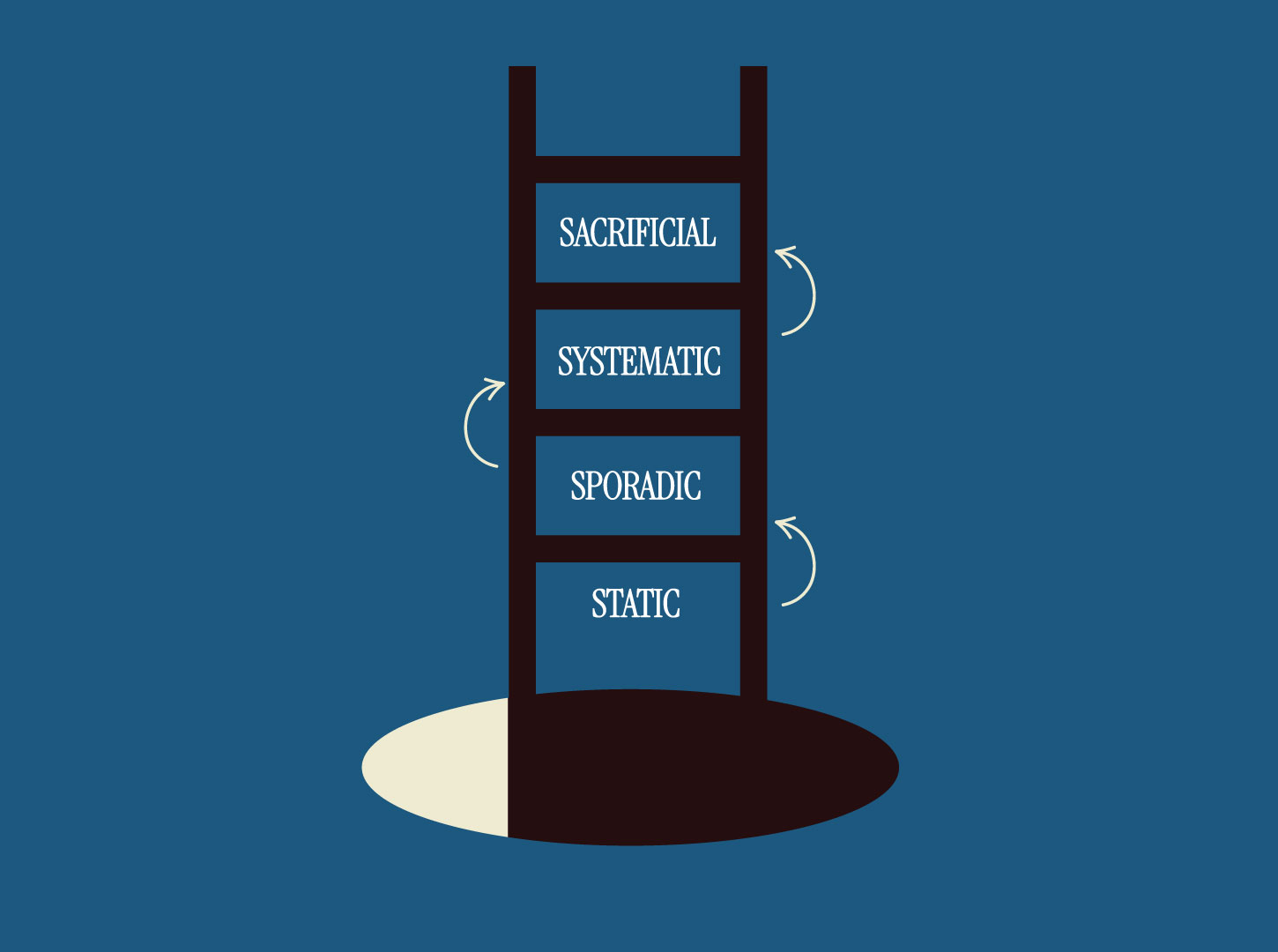
Use the Giving Ladder image from the Peace by Piece Vision Guide to discuss the following questions together:
- Where would you say you currently are on the Giving Ladder?
- What might be a next step of trust and generosity?
- What fears, hesitations, or panic might hold you back?
Practice
This week, mark out some time to pray through these 3 Questions from the last page of the Vision Guide:
- What piece is God calling me to contribute to build Peace by Piece?
- How will my 2-year commitment deepen my formation with Jesus?
- What sacrifice can I make today to help form disciples of Jesus in the future?
Consider making these part of a daily rhythm of prayer. As you pray, listen to any prompting, question, or thought you find yourself coming back to as a way to practicing discerning the next steps God might be calling you to take in your discipleship.
Pray
As you end your time together, spend the last few minutes praying over and encouraging each other.
Close your time with this benediction:
Holy Spirit, give us strength to follow you this week.
Meet us in miraculous moments,
and give us endurance for the marathon.
Amen.